Stop Falling for Cheap SEO: How to Spot a Maps Company Faking Your Data
I’ve been in this game for over 20 years. I’ve seen the rise and fall of countless algorithms, the birth of the local map pack, and the evolution of the Google Business Profile. But if there is one thing that hasn’t changed, it’s the predatory nature of “cheap” SEO providers. Every day, my inbox is flooded with messages from distraught business owners who spent their hard-earned money on a $99-a-month google business profile seo package, only to find their rankings have vanished or, worse, their entire business presence has been suspended by Google.
Let’s be blunt: if you are paying less for your monthly SEO than you do for your office’s coffee supply, you aren’t buying a service; you are buying a liability. These agencies rely on the fact that most small business owners don’t have the time to look under the hood. They use “smoke and mirrors” reporting to make it look like you’re winning while your actual local reach is shrinking. They promise to help you rank higher on google maps, but their methods are often nothing more than digital sleight of hand. I’m writing this because I’m tired of seeing good businesses get burned by “black hat” shortcuts and bot-driven reports. It’s time to expose how these companies fake your data and how you can protect yourself.
The Illusion of the “Green Grid”: Rigging Your Google Business Profile SEO
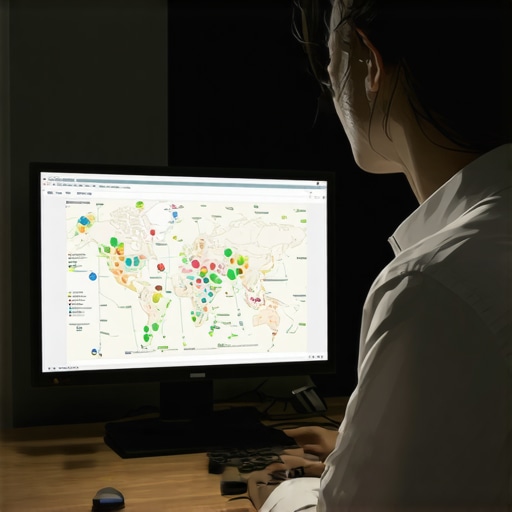
The most common tool in the cheap SEO arsenal is the “Green Grid” report. You’ve likely seen them: a map of your area covered in beautiful green circles with the number “1” inside them, suggesting you are the top result everywhere. While a google maps rank tracker is an essential tool for any legitimate consultant, it is also the easiest thing in the world to manipulate for an unsuspecting client.
Low-cost agencies often use “Geo-fencing” or localized IP proxies to rig these reports. They set the tracking parameters so narrow that the tool only checks your ranking from the exact center of your business location. Of course you’re ranking #1 when the search is performed from your own front desk! But what happens when a customer searches from two miles away? In many cases, you disappear entirely. This is a classic “incognito mode” trap. These agencies use localized proxies to show “rankings” that don’t exist for actual customers in the next neighborhood over. They are essentially showing you a photo of a trophy they bought at a thrift store and telling you that you won the race.
To truly understand your visibility, you need to look at the data yourself. I always recommend that business owners perform The 5-Minute Audit to Catch Agency Reporting Lies. If your agency refuses to show you rank tracking from multiple zip codes or refuses to explain the “search radius” they are using, they are hiding something. Using professional google maps seo tools is the only way to see past the fluff and understand where your business actually stands in the eyes of a real consumer.
The “Map Pin Dragging” Nightmare: A New Level of Sabotage
If you think fake reports are bad, wait until you hear about the “Map Pin Dragging” scam. This is a tactic that has been extensively researched by industry leaders like Darren Shaw and Joy Hawkins throughout 2024 and 2025. It is one of the most malicious forms of sabotage I’ve seen in two decades of google business profile seo consulting.
Here is how it works: A predatory google maps ranking service – often one you didn’t even hire, but a “competitor” agency – will suggest an edit to your Google Business Profile. They move your map pin 50 or 100 miles away from your actual physical location. Because Google’s automated systems sometimes trust “local guides” or high-level accounts more than the business owner, the change is often accepted instantly. Suddenly, your rankings in your actual city drop to zero because Google thinks you’ve moved to the middle of a forest or a different county.
When the business owner notices the drop in calls, the “cheap” agency they did hire often suggests moving the pin back immediately. This is where the “Suspension Loop” begins. Google’s algorithm views a sudden, drastic move of a map pin as a major red flag for fraud. Moving it back often triggers an immediate and permanent GBP suspension. You are then stuck in a bureaucratic nightmare trying to prove your business exists while your competitors scoop up all your leads. This isn’t just bad SEO; it’s professional sabotage. If an agency claims they can “fix” your rankings by moving your pin to a “better” location, run the other way. You should also read my guide on Why Your Business Pin Is Hidden from Customers Only One Mile Away to understand the technical nuances of pin placement.
Why Proximity (55.2%) is the Google Business Profile SEO Killer
One of the biggest lies told by budget agencies is that they can make you rank across an entire state or a massive metropolitan area for a few hundred dollars. The data tells a very different story. According to the 2025 Search Atlas study, proximity to the searcher (specifically proximity to the grid centroid) remains the dominant ranking factor. In fact, it accounts for a staggering **55.2%** of the weight in the local algorithm.
If an agency promises to **rank google business profile** listings across a 50-mile radius without a massive investment in local content and high-quality backlinking, they are lying to you. Proximity is the “Cheap SEO” killer because it cannot be faked with simple tricks. To truly improve google maps rankings, you need to focus on proximity and relevance, not just bulk citations. Google wants to show the most relevant, closest result to the user. If you are a plumber in North London, you are naturally going to struggle to rank in South London unless your profile is an absolute powerhouse of authority.
I always tell my clients to use the “Three-Block Test.” If you aren’t ranking in the top three for a search performed three blocks away from your office, your google maps ranking service is failing you. Many agencies use local seo software that only tells half the story; you need a tool that tracks the entire grid. Don’t let an agency tell you that proximity doesn’t matter or that they have a “secret way” to bypass Google’s distance filters. They don’t. They are likely just using bots to ping your profile from various locations to simulate “interest,” which will eventually lead to a manual penalty.
5 Red Flags Your SEO Agency is Using Bots
Identifying a fraud before you sign a contract can save you thousands. In 2026, the tactics have become more sophisticated, but the red flags remain remarkably consistent. If you see these signs, you are likely dealing with an agency that uses automated scripts rather than actual google business profile optimization strategies.
- Instant Results: If an agency promises you’ll be #1 in the map pack within 48 hours, they are using bots to spoof engagement. In the 2026 search landscape, legitimate ranking shifts take weeks or months of consistent work.
- Generic Review Patterns: Look at the reviews they “help” you get. Are they all five stars with no text? Do they all come from accounts with no profile pictures? Google’s AI filter is now incredibly good at spotting these patterns.
- Hidden IP Addresses in Reports: A transparent agency will show you exactly where their data is coming from. If your reports are vague about the “searcher’s location,” they are likely using a VPN to hide the fact that they are searching from their own office.
- No Mention of On-Page Optimization: SEO for maps isn’t just about the maps. It’s about your website. If they aren’t asking for access to your site to improve your local landing pages, they aren’t doing google business profile seo; they are just playing with your map listing.
- Refusal to Show Search Console Data: Google Search Console is the source of truth. If their “custom dashboard” shows 1,000 clicks but Search Console shows 10, you are being lied to.
I’ve detailed these risks further in my checklist: 4 Red Flags in Your 2026 SEO Agency Comparison [Checklist]. Always remember: if it feels too easy, it’s probably against Google’s Terms of Service.
The “Black Hat” Review Trap and the 2025 AI Filter
Review quantity used to be the primary driver of the gmb ranking service industry. Agencies would sell packages of 50 reviews for $100, and for a while, it worked. Those days are dead. Google’s 2025 algorithm shift placed significantly higher weight on the *quality* and *authenticity* of reviews over mere quantity. More importantly, Google now uses advanced AI models to analyze the sentiment, metadata, and user history of every review posted.
Buying reviews is now a death sentence for a google business profile ranking. When Google’s AI filter detects a burst of fake engagement, it doesn’t just delete the reviews; it often shadow-bans the profile. This means your business might still look “active” to you, but it will never appear in the top three results for a competitive search. These “black hat” agencies don’t care because they’ve already moved on to the next client by the time the penalty hits. They are experts at How to Spot an SEO Agency Padding Their Reports with Fake Interaction Data, and you need to be just as expert at catching them.
Real google business profile optimization involves a sustainable review acquisition strategy – asking real customers for honest feedback. This builds “NAP” (Name, Address, Phone) consistency and trust, which are the real pillars of the 2025 algorithm. If you want to get more calls from google maps, your data must be clean and your profile must be fully optimized with real-world interactions.
How to Properly Audit Your Google Business Profile SEO Provider
You don’t need to be a technical genius to audit your SEO provider. You just need to know which questions to ask and where to look. The first place I always direct business owners is their own “Insights” tab in the Google Business Profile dashboard. Don’t look at “Views” – views are a vanity metric that can be easily inflated by bots. Instead, look at “Actions.” How many people clicked to call? How many requested directions? How many visited your website?
If your agency’s reports show massive growth in “Visibility” but your phone isn’t ringing, you are being scammed. A real local map pack seo strategy results in tangible business growth. You should also use a third-party google business profile audit tool to get an unbiased view of your profile’s health. These tools can identify missing information, duplicate listings, and citation inconsistencies that your agency might be ignoring.
Another key area to check is your “Search Queries.” What terms are people actually using to find you? If you are a “Personal Injury Lawyer” but you are only ranking for your own business name, your SEO agency isn’t doing their job. They should be helping you rank for high-intent, non-branded keywords. For more on this, check out The Hidden Data in Your Business Profile Insights That Actually Predict Sales.
Conclusion: Demand Real Work, Not Smoke and Mirrors
The “cheap SEO” trap is enticing, especially when you’re trying to manage a tight marketing budget. But in the world of google business profile seo, you truly get what you pay for. Real local authority isn’t built with $99 packages, bot-driven reviews, or manipulated grid reports. It is built through consistent NAP management, high-quality local content, genuine customer engagement, and a deep understanding of the 55.2% proximity factor.
If you are currently working with an agency and any of the red flags I’ve mentioned today sound familiar, it’s time to take a step back. Don’t let your business become a victim of a “Map Pin Dragging” scam or a “Suspension Loop.” Your Google Business Profile is often the first point of contact between you and your customers – it is too valuable to leave in the hands of people who use shortcuts. Demand transparency, demand real data from a legitimate google business profile audit tool, and never settle for reports that don’t translate into real-world phone calls and sales. If you’re ready for a real audit, one that looks at the actual health of your profile rather than just the “green circles,” it’s time to get to work.